
Public Sources for Petersburg Neighbors by Block
Start with the physical block and let each source supply its own limited kind of evidence. A parcel viewer can show adjoining land and recorded owners; city map layers show street and civic geography; a historic directory may show an address listing for its date. None of these sources is a current roll of every person living nearby. Classify a parcel before drawing a conclusion: it may be a public asset, utility parcel, church, school, business, vacant land, or a separately assessed improvement.
| Source | What It Shows About a Block | Access |
|---|---|---|
| CivQuest parcel viewer | Adjacent parcel shapes, owner, mailing and situs addresses, use, zoning, legal description, values, and districts | Public viewer; live endpoint was intermittently unavailable during research |
| City GIS layers | Street centerlines, address points, parcels, utilities, flood, zoning, wards, land use, and public assets | Public map, GIS email, or existing-record request |
| Circuit deeds and plats | Adjacent owners, lots or blocks, easements, and title sequence | Clerk access, counter, or historic Library of Virginia microfilm |
| Voter portal and statute | A person’s own status, polling place, and voting history, plus rules restricting public list access | Authenticated portal and restricted statutory list copies |
| Code and permit files | Existing alteration, inspection, or code material keyed to an address | iWorQ route, office, or Virginia FOIA request |
| Historic directories and street compilation | Past address listings, occupations, and household clues for their date | Library or archival research access |
Recorded ownership is not occupancy, and a mailing address is not a home-address finding. Keep the starting address, map date, parcel number, and source date on the worksheet so a later reviewer can see what was actually observed about the block.
Map a Petersburg Block from One Address Outward
The City of Petersburg Real Estate Property CivQuest viewer and the City GIS provide the practical starting pair. The map controls documented in city material include Nearby, Select, Measure, Draw, and map browsing. The exact click sequence for two adjoining parcels was not captured in the research, so treat the method as a careful review workflow rather than a promised screen path.
- Locate the starting address and save its parcel or map number, property address, legal description, and map date.
- Open the map and identify directly adjoining parcel polygons with Nearby, Select, or map browsing.
- List those parcels clockwise, noting the street-facing address, owner, mailing address, property use, zoning, and historic-district field.
- Use street centerlines and address points to stay on the intended block, and use Measure or Select only to define the area being reviewed.
- Read the legal description to distinguish a rear lot, condominium, or separately assessed improvement from a shape that only appears contiguous on the map.
For a full named-street parcel workflow, use the Petersburg street directory. This page stays with the immediate block and the public civic context around it.
What an Adjacent Petersburg Parcel Card Can Show
Each adjacent parcel card can show the assessor’s public record for land: owner name, owner mailing address, property address, property use, state class, zoning, legal acreage, legal description, subdivision, assessment neighborhood, historic-district fields, ward, polling place, census tract, improvements, ownership history, assessments, and tax information. That is substantial civic and property context, but it does not turn a parcel into a list of the people there.
Keep the map’s situs geography separate from the owner’s mailing geography. A recorded owner can receive correspondence in another city or at a post-office box, and a parcel can be a nonresidential use. The current property card is strongest when it is used to identify the parcel, its legal clues, and the appropriate next public record, such as a deed, plat, or permit.
Why the Voter Portal Cannot Become a Block Roll
The Virginia voter status lookup requires first name, last name, full date of birth, last four Social Security digits, locality, and authorization certification. It lets a voter or authorized user reach that voter’s status, polling place, and voting history. It is not a public name, address, or street browser, and Virginia does not register voters by party.
The Virginia voter-record list statute limits who may receive copies and the allowed purposes.
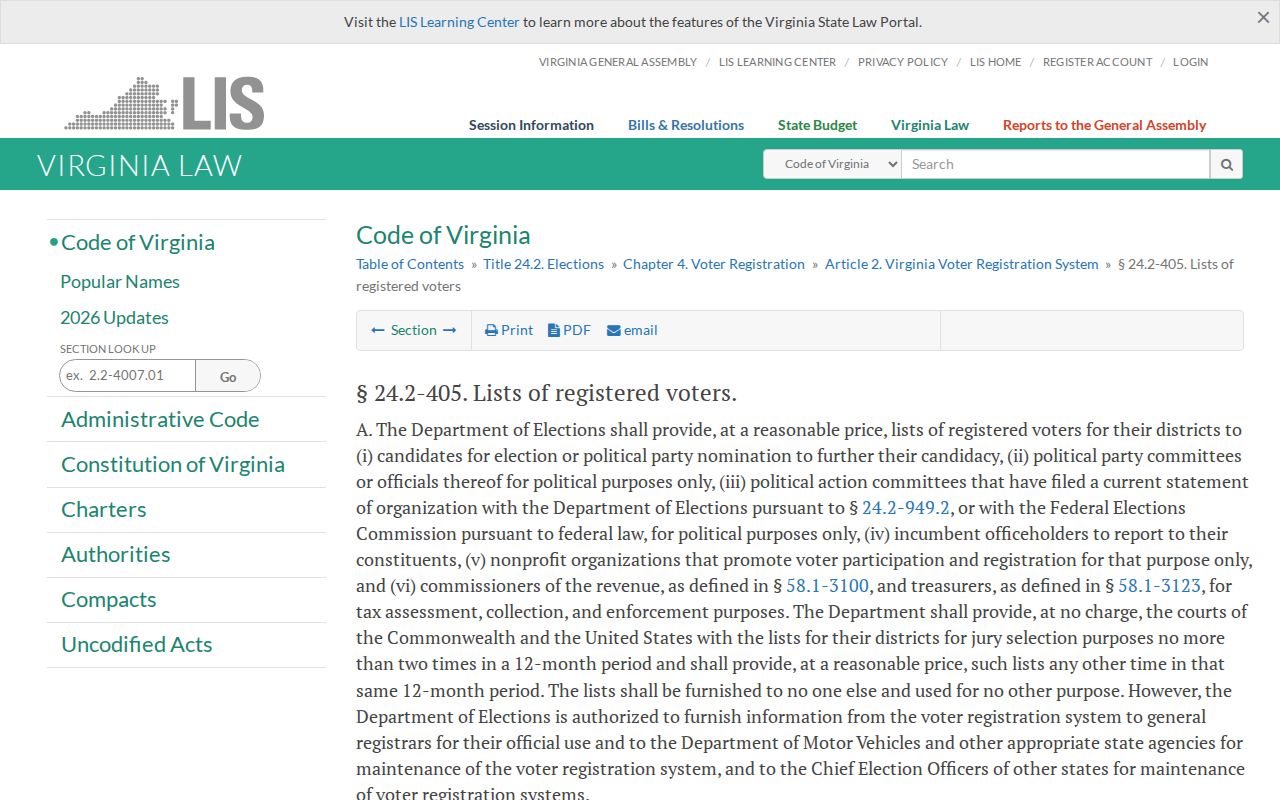
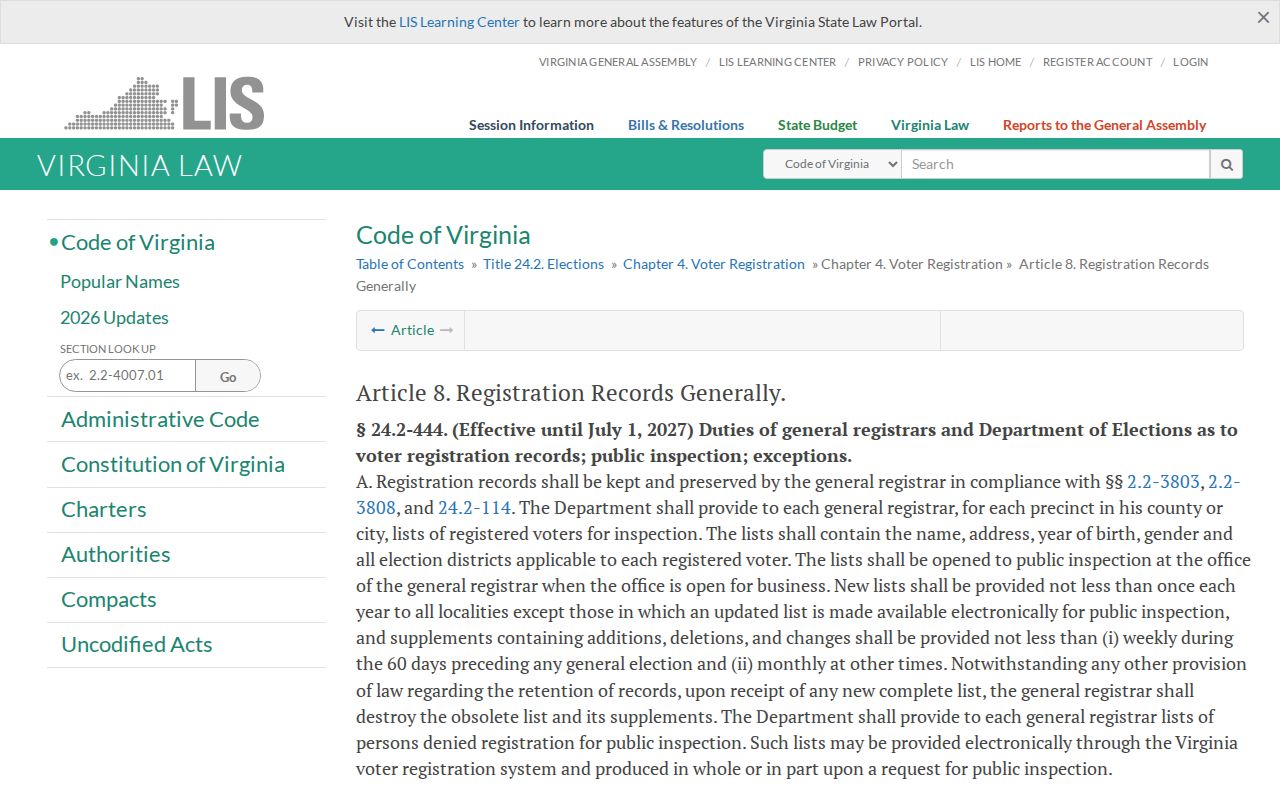
Virginia’s public-inspection rules exclude Social Security numbers, day and month of birth, certain protected residence information, declination to register, and agency-of-registration information. A parcel card’s polling-place field therefore describes civic geography, not a list of voters on the surrounding block.
The Virginia voter-records chapter is the source for the broader restrictions and protected fields.
For a person’s own registration question, the Petersburg Registrar publishes the local process channel. For block research, stop at lawful civic geography rather than trying to infer registration or residence.
Petersburg Civic Bodies Are Public, Not Member Directories
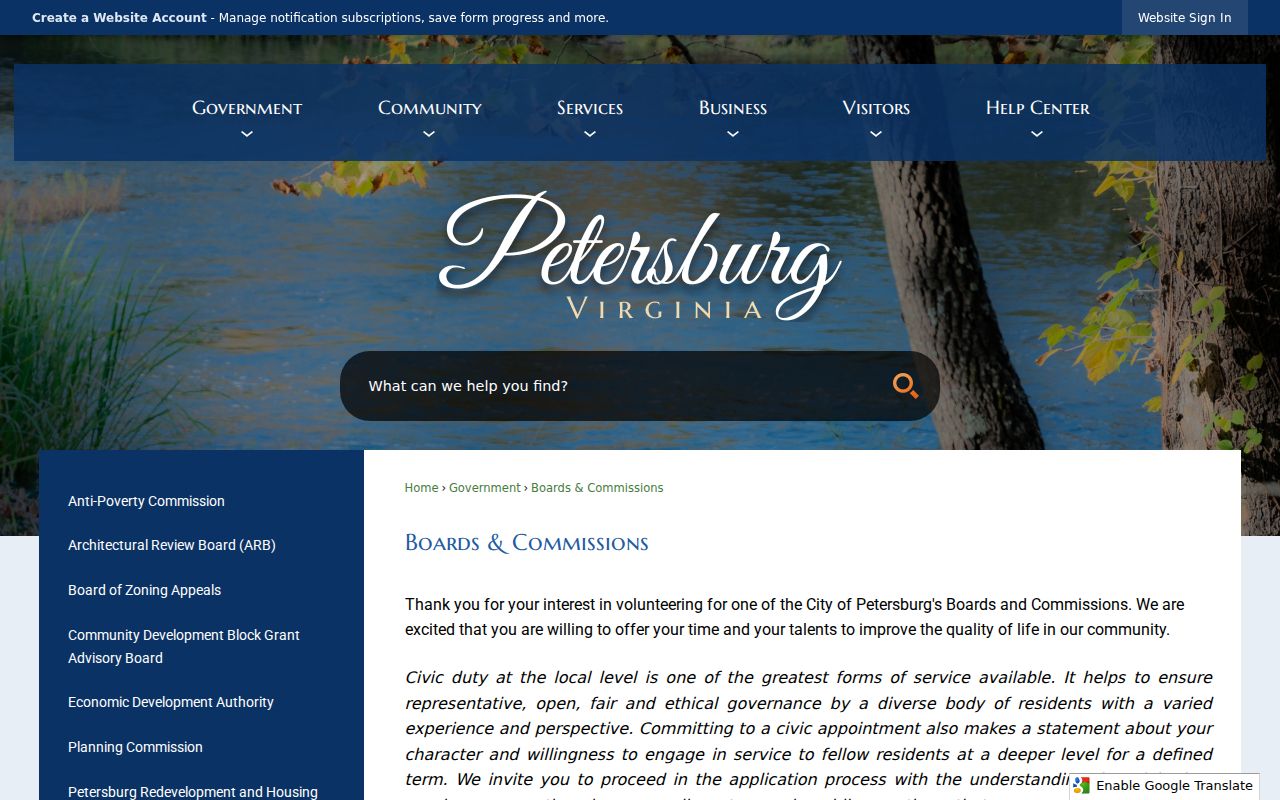
The city’s public civic layer can give a block useful context without purporting to identify neighbors. The Petersburg Boards and Commissions page names bodies that meet or operate in a public civic capacity. Planning, zoning, historic-district, and redevelopment records can identify an applicant, owner, representative, or speaker in a particular proceeding. That role is not proof that the person lives near the property.
| Public civic body | Useful block context | Limit |
|---|---|---|
| Architectural Review Board | Historic-district exterior-work review and agendas | Not a roster of nearby residents |
| Board of Zoning Appeals and Planning Commission | Land-use, zoning, or development proceedings | A participant may be an applicant, agent, or speaker |
| Economic Development Authority | Public redevelopment and civic-property context | Not a household directory |
| School Board, CDBG Advisory Board, and Social Services Advisory Board | Public bodies and public meeting context | Do not infer a member’s block or residence from service |
The Petersburg Boards and Commissions page is the official civic-directory fallback used here.
No current comprehensive official neighborhood-association directory was located. City material refers to Berkley Manor’s neighborhood association in a 2022 Planning Commission minute and to Folly Castle Neighborhood Association in a council biography, but the research did not verify current boundaries, activity, contact information, or member access. Treat those as leads to confirm directly, not as a ready-made neighborhood list.
Historic-District Context Changes What a Block Record Means
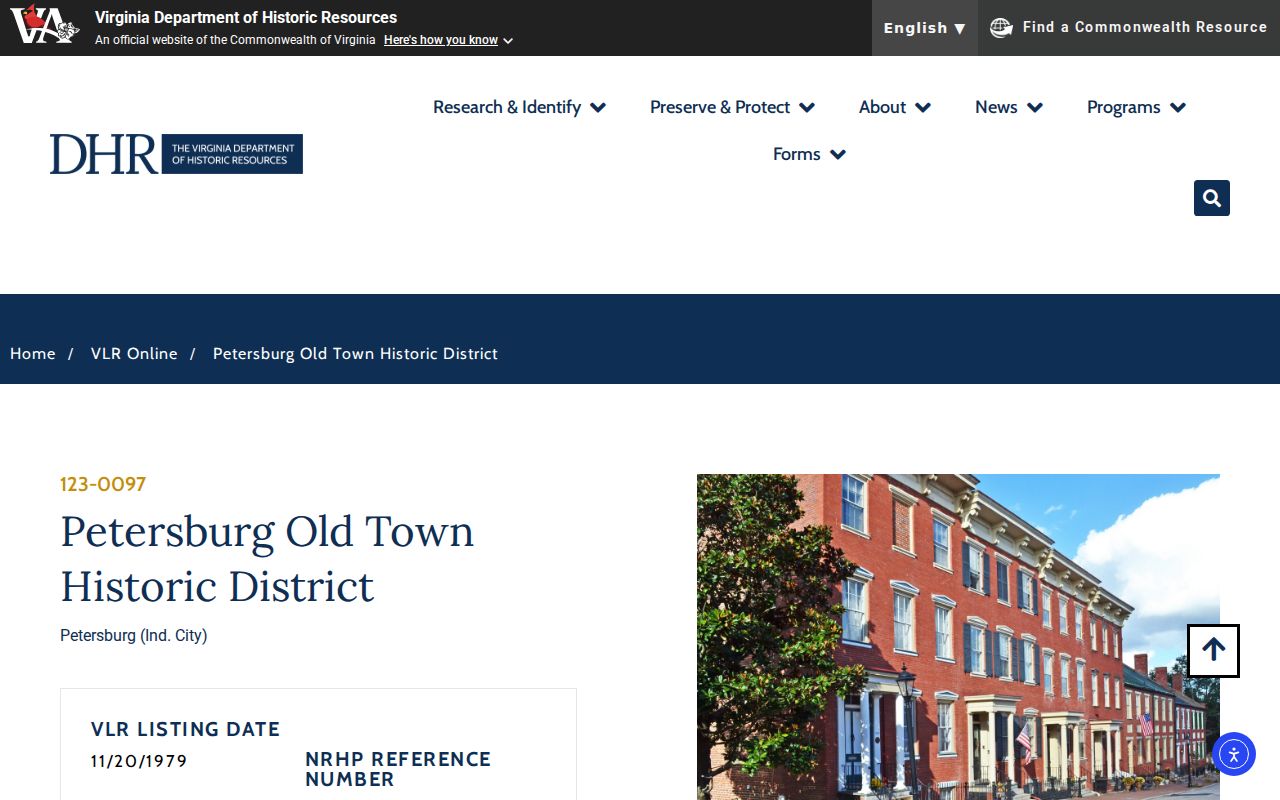
A location within a historic district may have a public review trail in addition to deeds and permits. The Virginia DHR Old Town Historic District record describes the central business district, High Street, and Grove Avenue areas and notes roughly 250 buildings on 190 acres. Its 2025 additional documentation extended the period of significance to 1973. That makes historic-district status a useful property-context field, not an identity label for people on the block.
The Virginia DHR Old Town Historic District page provides the documented historical context.
When a parcel’s historic-district field and an address match, look for public Architectural Review Board or planning material about the property. Avoid assuming that the present façade, address numbering, owner, or nearby land use was the same in an earlier period.
Official Block Records and Commercial Categories Answer Different Questions
An official parcel card identifies a record created for assessment and land administration. A deed identifies a recorded property transaction. A city agenda identifies a public proceeding. A historic directory identifies what it printed in a particular year. Each source has an accountable custodian and a date, even though it may still be incomplete for a personal question.
Commercial neighbor-lookup categories often combine public records, purchased datasets, and user-submitted material into a convenient list. Such material can be stale, can merge people with the same name, and may omit the source date or the distinction between owner, mailing addressee, and occupant. Use any broad commercial result only as an unverified lead, then return to the official or historical record that supports the specific fact. No category should be used to work around protected addresses or household privacy.
Petersburg Police Records Are a Controlled Address Source
Address and date can also identify whether a city incident or crash record exists, but the Petersburg Bureau of Police Records and Technology page is a controlled records channel, not a neighbor directory. Its listed functions include incident and accident reports, fingerprints, photographs, public information, and warrants. The city fee table lists crash and incident reports at $5 and identifies separate Virginia FOIA charges for administrative time and reproduction.
The Petersburg Police Records page shows the official process and contact channel.
An incident or crash document should be requested only for a legitimate, specific public-records purpose and read within its access limits. It cannot establish a person’s current address or replace the parcel-and-map workflow for understanding the block.
Privacy Limits on a Petersburg Neighbor Lookup
Parcel ownership does not name every occupant. Utility customer information and DMV residence data are not public substitutes, and protected voters or Virginia Address Confidentiality Program participants may have a withheld or substitute residence address. A public map can remain available even when a person’s address information is protected. Do not compile or republish sensitive identifiers simply because a historical record image contains them.
Lawful use. Use public records to understand a block, connect with local civic life, or verify a property question. Do not use them to watch, follow, threaten, harass, or intimidate anyone. Treat a protected address or an unclear record as a reason to stop, not a problem to work around.