
Era Sources for Previous Residents at a Petersburg Address
A backward address trail begins with the current parcel and then moves into the record set closest to the era being studied. Land records establish recorded ownership; address directories and censuses can supply dated household evidence; maps and permits provide physical context. These sources overlap imperfectly, so keep the publication or record date with every result.
| Source | Years It Covers | Where Held | What It Shows |
|---|---|---|---|
| Deed books and indexes | From 1784 in the historic series; current online cutoff not located | Circuit Court Clerk and Library of Virginia microfilm | Recorded owners, transactions, legal descriptions, and title references |
| Petersburg city directories | 1860; 1876 onward, with gaps not itemized | Petersburg Public Library Research Room | Dated names, addresses, occupations, and possible household notes |
| Criss-cross directory | 1989–1994 cataloged Petersburg run | Library of Congress inventory; confirm holding and volume access | Address-organized occupant or business lead for its publication year |
| Federal census | 1790–1950, under the 72-year release rule | NARA, library databases, and Library of Virginia resources | Household composition, age, birthplace, occupation, and geography |
| Sanborn maps | 1903; 1921–1934 local microfilm coverage | Petersburg research room and Library of Virginia microfilm | Building footprint, use, and physical address context, not a resident list |
| Chancery | 1787–1979; images 1787–1912; some indexed causes through 1960 | Library of Virginia / Virginia Memory | Estates, land, disputes, correspondence, and relationship clues |
Start with the current card and deed when the question is ownership. Start with the closest dated directory or census source when the question is who appeared at the address in a particular period. If a historic number no longer matches, use the plat, legal description, street compilation, and map before assuming the record belongs to the same place.
Begin with the Current Petersburg Parcel Card
The current parcel card is a bridge into, not a replacement for, earlier sources. It can show owner name, owner mailing address, property address, legal acreage, legal description, subdivision, property use, zoning, district fields, assessments, and ownership history. The inspected sample for map number 031350014 showed a prior owner, a 1985 sale, and a deed book/page citation. That illustrates the kind of starting reference a card may offer, not a universal search result.
Copy the property address separately from the mailing address. A tax-mailing address may be outside Petersburg or a post-office box, while the property address identifies the parcel being traced. When an older deed calls the land by a lot, block, or metes-and-bounds description, use that wording to test the link back to the current card.
When Petersburg’s Deed Trail Reaches Microfilm
The Library of Virginia Petersburg microfilm catalog documents deed history beginning with Hustings Court Deed Book 1 for 1784–1790. It lists a general deed index for 1784–1869, later general indexes for 1869–1879 and 1880–1890, and deed books continuing into the twentieth century. Catalog coverage identifies a record series and reel, not proof that every page is online or available through interlibrary loan.
The Library of Virginia catalog provides the archival starting point for older Petersburg deeds.
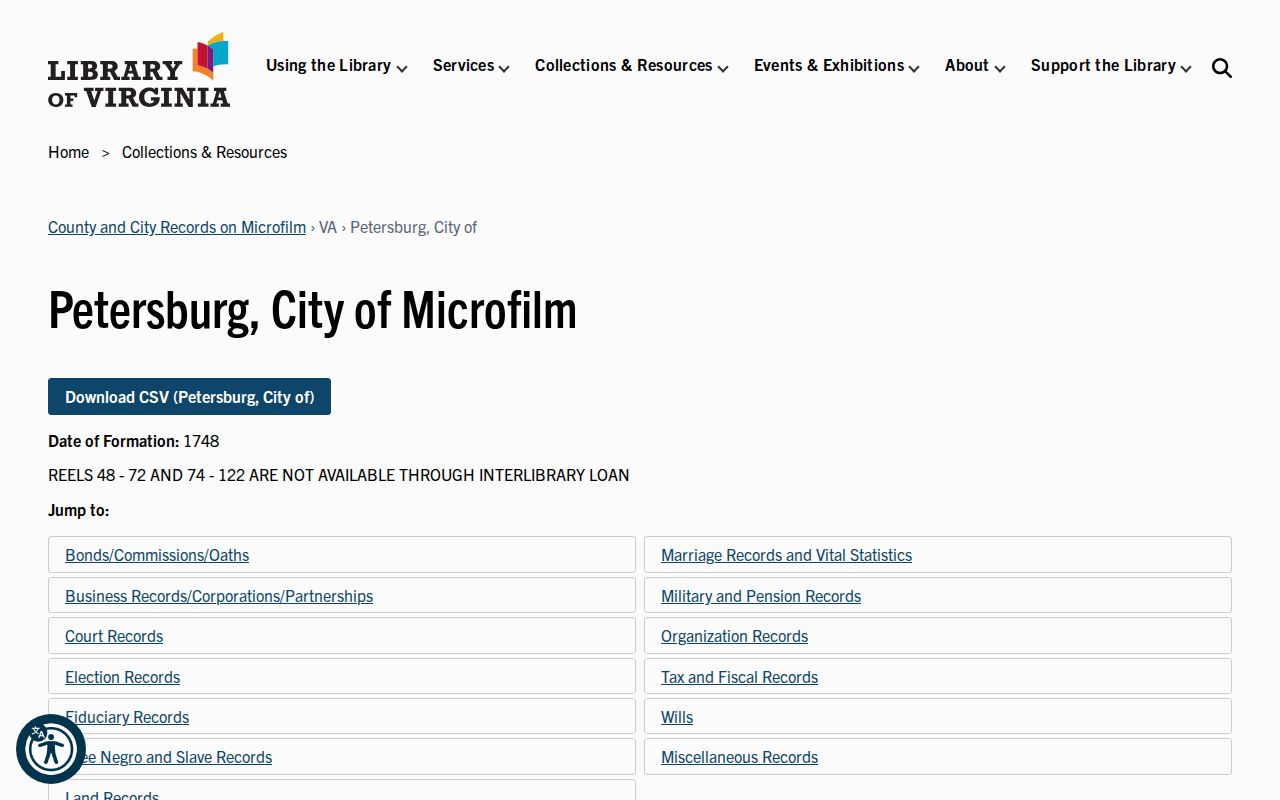
For an address history, bring the exact book, range, reel, grantor/grantee, and legal-description clues to the catalog rather than browsing a broad surname alone. Some Petersburg reels are not available through interlibrary loan, so a local research-room or Richmond visit may be the practical next step.
Follow a Petersburg Deed Chain Backward
In Petersburg, the address is only the opening clue. The backward chain depends on the property’s map number, legal description, and the book/page or document reference shown in the ownership history. The seller in a purchase deed is the prior owner to investigate, but names alone are not enough to join two transactions.
- Open the current parcel in CivQuest and preserve the map number, owner, mailing and property addresses, legal description, and ownership-history citation.
- Retrieve the purchase deed through the Petersburg Circuit Court Clerk index, secure remote-access route, or counter.
- Record grantor, grantee, recording date, book/page or instrument number, legal description, consideration, prior reference, and any easement or lien information.
- Search the seller as grantee in an earlier instrument, then verify the legal description, lot or block, and recording sequence before carrying the chain backward.
- When the usable online series stops, continue with the Library of Virginia Petersburg microfilm catalog and deed books rather than guessing an online coverage year.
- Grantor and grantee
- The grantor transfers an interest in the deed; the grantee receives it. In a backward chain, the seller can lead to the earlier purchase record.
- Chain of title
- The ordered sequence of recorded transfers for the same parcel or legal description. It is a land-history trail, not an occupancy roster.
- Legal description
- The lot, block, subdivision, or metes-and-bounds wording that identifies the land. It is often more dependable than a street number in older records.
- Enumeration district
- The census geography used to organize enumeration. It helps place a household in the correct area but does not replace the address evidence in a directory.
Petersburg Chancery Can Explain a Break in Title
Not every transfer is a simple sale. Estate administration, partition, heirship, debt, and title disputes can move an interest in a parcel or explain why an expected deed link is missing. The Library of Virginia Chancery Records Index reports Petersburg City coverage from 1787–1979, digital images for 1787–1912, and indexed information for some causes through 1960. Read a chancery file as context for a legal or family question, not as proof that everyone named lived at the address.
The Library of Virginia Chancery Records Index is the source for this Petersburg coverage.
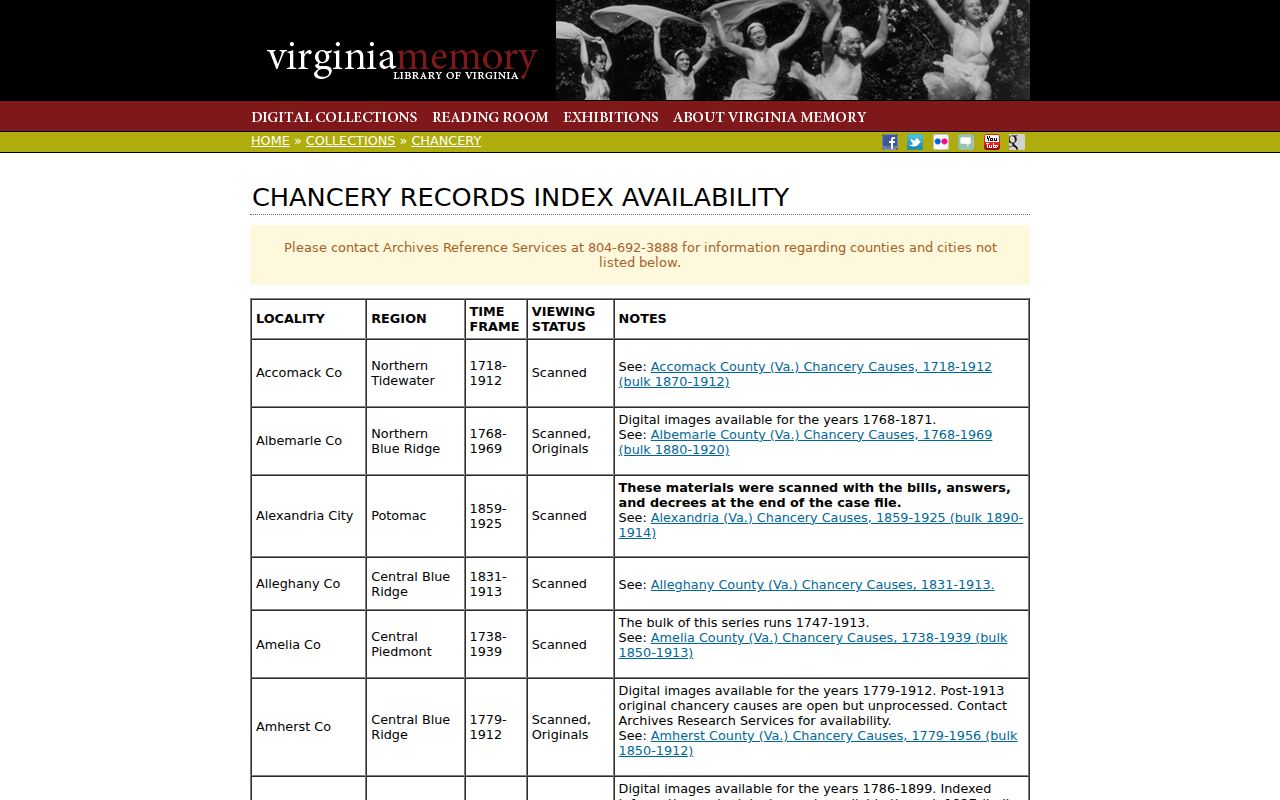
Chancery can add affidavits, correspondence, estate papers, and land context to the ownership trail. Preserve the cause name, locality, date, and image or page reference so another researcher can distinguish an informative file from a same-name lead.
Use a Criss-Cross Directory as an Address Checkpoint
A criss-cross directory is organized by address rather than surname, which makes it useful after the deed and map work identifies the address form for a given year. The Library of Congress inventory lists a Petersburg, Virginia, run for 1989–1994. It is a confirmed catalog lead, not a guarantee that a particular institution has every page. Confirm the holding and date before a visit or request.
The Library of Congress criss-cross directory guide explains the address-organized format and identifies the Petersburg listing.
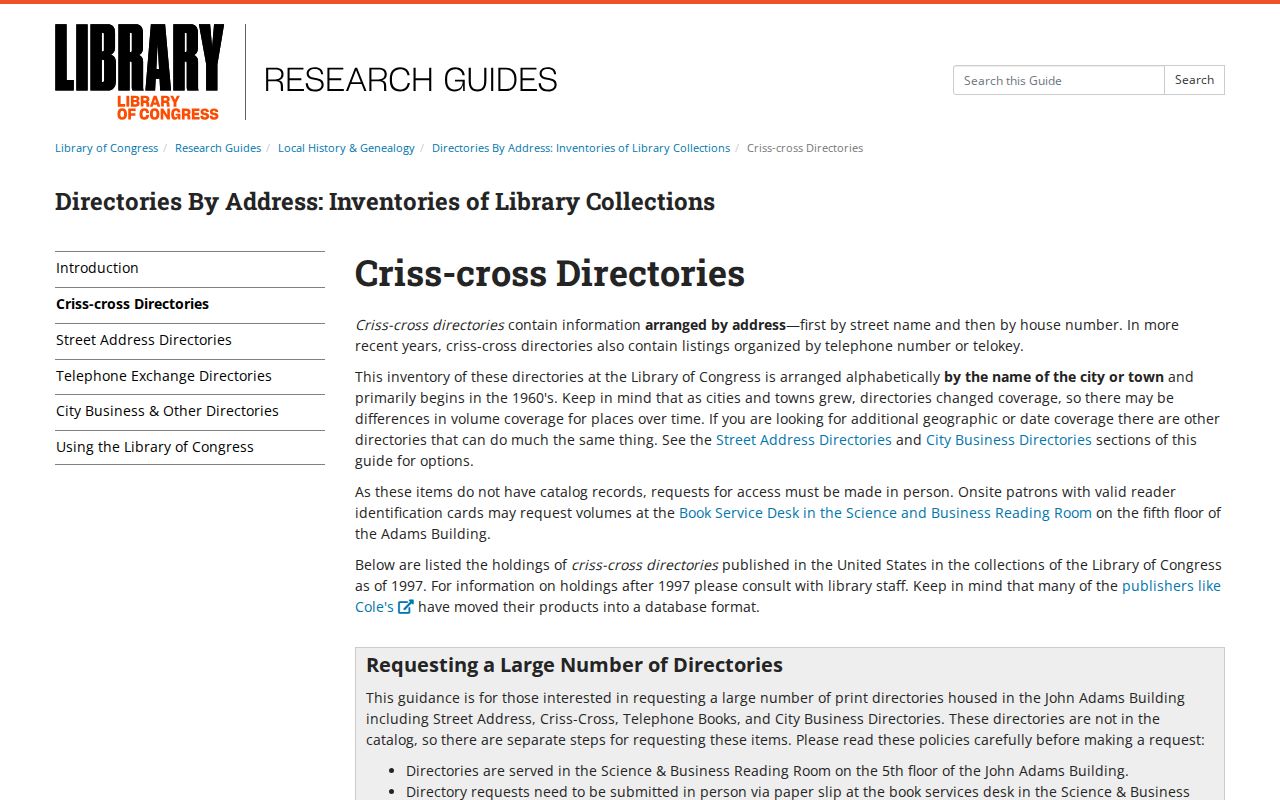
Use the directory’s publication year as the evidence date, then pair it with a census year or a neighboring directory issue. The sequence can show a change in the address listing, but it should never be stretched into an unbroken account of a household between volumes.
Maps and Annexations Protect an Old Address Trail
Sanborn maps provide a building’s footprint and use, not a complete list of people. The Petersburg Public Library Research Room is identified as holding Sanborn microfilm, and the local research includes 1903 and 1921–1934 coverage. Read the map beside the deed’s legal description and the directory’s printed number to see whether the physical site and address form still align.
Petersburg’s local label also changes over time. Annexations from Dinwiddie and Prince George occurred in 1921, 1932, 1945, 1956, and 1971, with a 1991 Prince George boundary adjustment. When the year falls near a boundary change, search Petersburg City and the adjacent county series and preserve the locality exactly as printed. That geographic caution is often the difference between a defensible match and a convenient one.
Petersburg’s Research Room Brings the Address Sources Together
The Petersburg Public Library is the local access point for a valuable concentration of house-history material. The DHR historic-context report identifies the Research Room’s Petersburg City Directories from 1860 and from 1876 forward, Sanborn maps on microfilm, the 1877 Beers map, and Petersburg newspaper microfilm from 1784 onward, with Civil War-year and some early-nineteenth-century gaps. Confirm a particular volume and current research-room access before making a trip.
That concentration supports a human-scale research visit: bring the current address, historic variants, map number, legal description, an approximate move or sale date, and any directory or census name already found. The 1877–78 street-arranged directory compilation can help bridge an address question, while maps and newspapers can check the physical site and key life events. It is better to preserve a missing year than to fill the gap with an unsupported story about a prior household.
Pair Directories and Census for Petersburg Past Households
A deed trail names recorded owners, while a dated directory and census schedule can supply a different kind of evidence about the people listed at the address. Begin in the alphabetical directory section with the known surname, preserve the spelling, initials, address, occupation, and any relationship note, then check the street or address section for the same number. Use a nearby edition on either side of a move before treating a disappearance as a departure.
- Choose the directory issue closest to the address event and transcribe the entry exactly as printed.
- Check the address section or a criss-cross volume for the same number, noting an alternate spelling, business, or second listing.
- Pair that evidence with the nearest available census schedule and compare age, birthplace, occupation, spouse or children, and nearby households.
- Use a preceding or following directory, the deed sequence, and a map to test whether a change reflects a move, a renumbered address, a missed volume, or an entirely different parcel.
Pair a directory year with the closest available census schedule and compare age, birthplace, occupation, spouse or children, and nearby households. The Petersburg Directory Book covers the historical collections in more detail. The address-specific lead here is the Library of Congress criss-cross directory inventory, which documents a Petersburg run for 1989–1994, subject to confirmation of the holding and page access.
House-history use. Previous-resident research is best kept to family history, estate questions, historic preservation, and personal curiosity. Do not use a historical address trail to pursue, harass, threaten, or expose a living person.